Why Most Habit Trackers Fail (And What We Built Instead)
The problem with most habit apps isn't missing features. It's that they show you numbers when your brain needs something to protect.
The Habit Tracker Graveyard
You've probably tried a few. Maybe more than a few. You download a habit tracker, set up your goals, check things off for a week — maybe two — and then it quietly disappears into a folder you never open.
It's not your fault. And it's not a willpower problem.
Most habit trackers are built around the same idea: track a number. Days completed. Percentage. Streaks as digits on a screen. The assumption is that if you can see the data, you'll stay motivated.
But data doesn't create motivation. Connection to your progress does.
Why Numbers Don't Stick
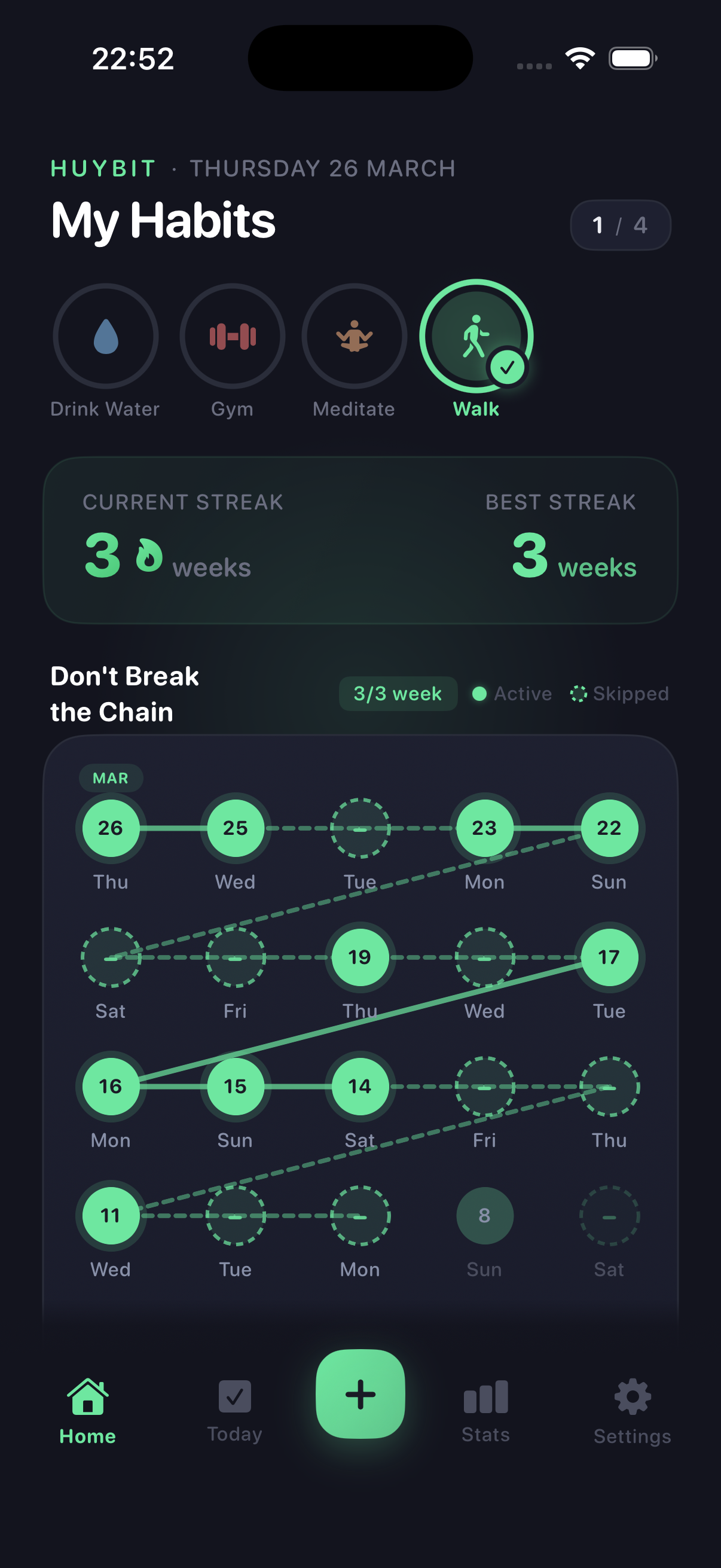
There's a reason "don't break the chain" works better than "you've completed 73% of your goal this quarter." One is something you feel. The other is something you calculate.
Research in behavioral psychology consistently shows that visual progress is more motivating than numerical progress. When you can see what you've built — physically, visually — it activates a different kind of motivation. Not the kind that says "I should." The kind that says "I don't want to lose this."
The best motivator isn't a goal you're chasing. It's something you've built that you don't want to break.
This is loss aversion at work. We're wired to protect what we have more than to pursue what we don't. A streak number of "14" is abstract. A chain of 14 connected links that you built, one day at a time, is concrete. It's yours. And it hurts to break.
The Three Reasons Habit Trackers Fail
1. They overwhelm you with features
Most habit apps try to be everything — a calendar, a journal, a social network, a gamification engine. The more features they add, the more friction they create. And friction is the enemy of daily habits.
When opening your habit tracker feels like opening a project management tool, you stop opening it.
2. They don't show progress you can feel
A completion percentage doesn't make you feel anything. A bar chart of your weekly performance doesn't make you want to show up tomorrow. These are reporting tools, not motivation tools.
The best habit systems make your progress tangible. Jerry Seinfeld didn't track his writing streak in a spreadsheet — he drew X's on a wall calendar. The visual chain was the whole point.
3. They punish instead of protect
Miss a day in most habit trackers and everything resets. Your streak goes to zero. Your stats take a hit. The message is clear: you failed.
But building habits isn't about being perfect. It's about showing up more than you don't. A good system acknowledges missed days without making them feel catastrophic. It lets you see the full picture — the good days, the gaps, and the recovery.
What We Built Instead
We built Huybit around one idea: your habits should be something you can see growing.
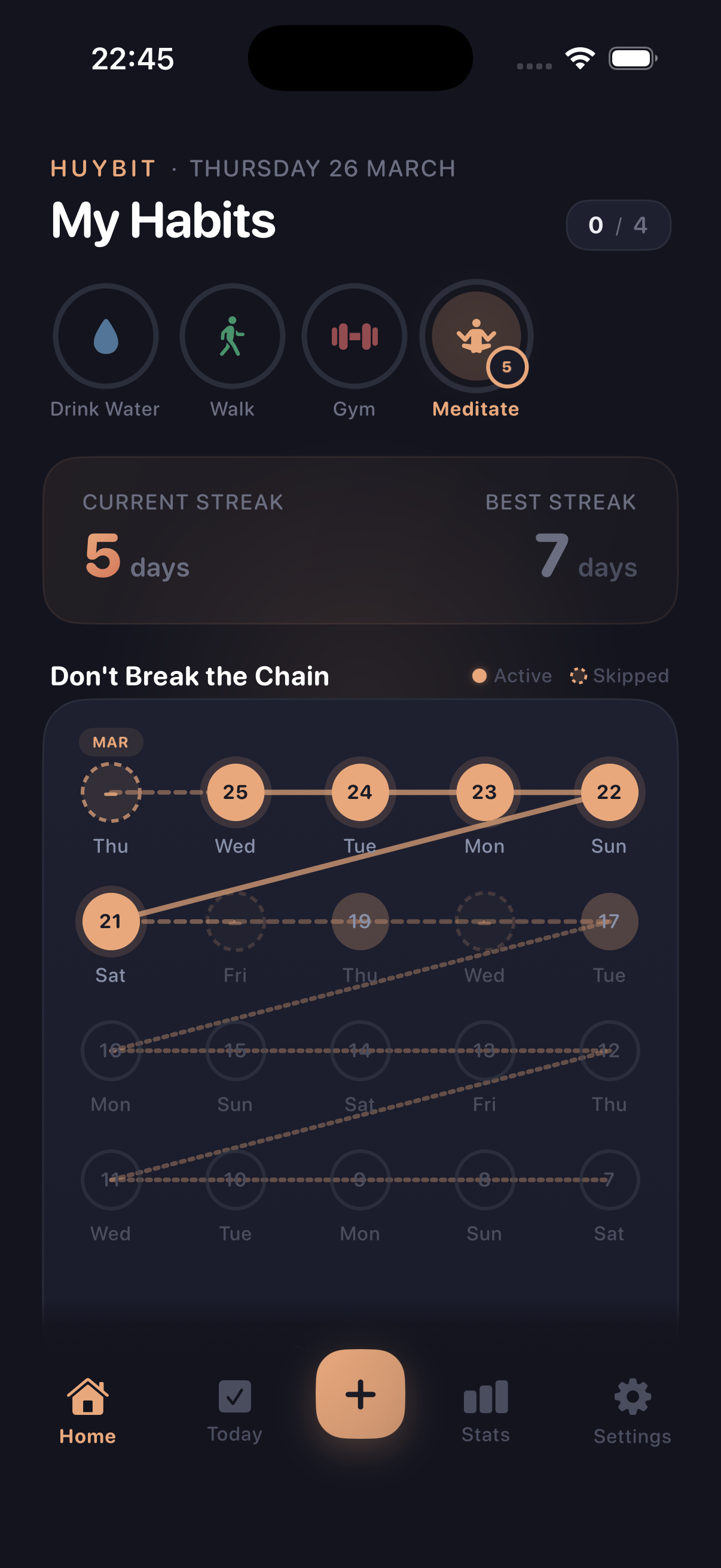
Every habit gets a chain. Not a number, not a percentage — a visual chain that grows with every day you show up. Each link is a day. Each connected stretch is proof that you kept going. When the chain is long, you protect it. When it breaks, you can see exactly where and start rebuilding.
This isn't gamification. There are no points, no leaderboards, no social pressure. It's just you and your chain.
Flexible scheduling that fits your life
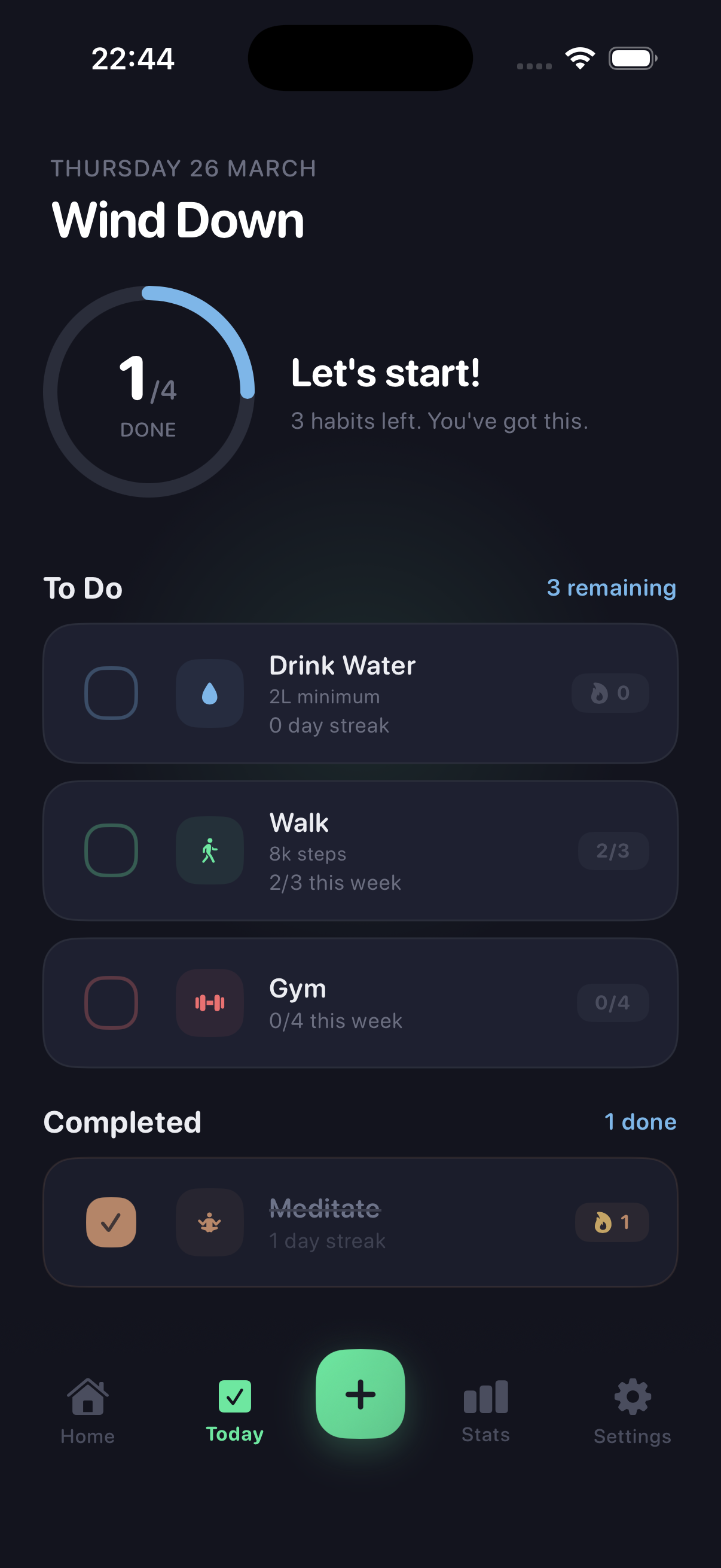
Not every habit needs to be daily. Some habits work better three times a week. Some only on weekdays. Huybit lets you set your own rhythm — daily, weekdays, 3x per week, or a custom frequency. Your chain adapts to your schedule, so you're never penalized for taking a planned rest day.
Progress you can feel immediately
From the moment you complete your first day, the chain starts building. You don't have to wait for a full week or hit a target to see your progress. Every completion lights up immediately. The chain stays alive through today as long as you haven't broken it — no false alarms, no premature resets.
Notes that turn tracking into reflection
Any day on your chain can hold a note. What worked? What didn't? What were you feeling? Over time, these notes become a journal of self-awareness that helps you understand not just what you did, but why some days are harder than others.
Privacy as a feature, not a footnote
Your habits are deeply personal. What you're trying to build, what you struggle with, what you skip — that's nobody's business but yours.
Huybit stores everything on your device. No accounts required. No analytics tracking. No data sold or shared. If you want backup, optional iCloud sync runs through Apple's encrypted infrastructure. We never see your data.
The Chain Changes the Equation
Here's what happens when you replace abstract numbers with a visual chain:
- Day 1: You complete a habit. A single link appears. Small, but real.
- Day 7: The chain is growing. You start to feel protective of it.
- Day 30: Breaking it would mean losing something you built. That's the motivation shift — you're no longer chasing a goal. You're protecting what's yours.
This is the difference between "I should work out today" and "I've worked out 30 days in a row and I'm not stopping now." The first is discipline. The second is identity.
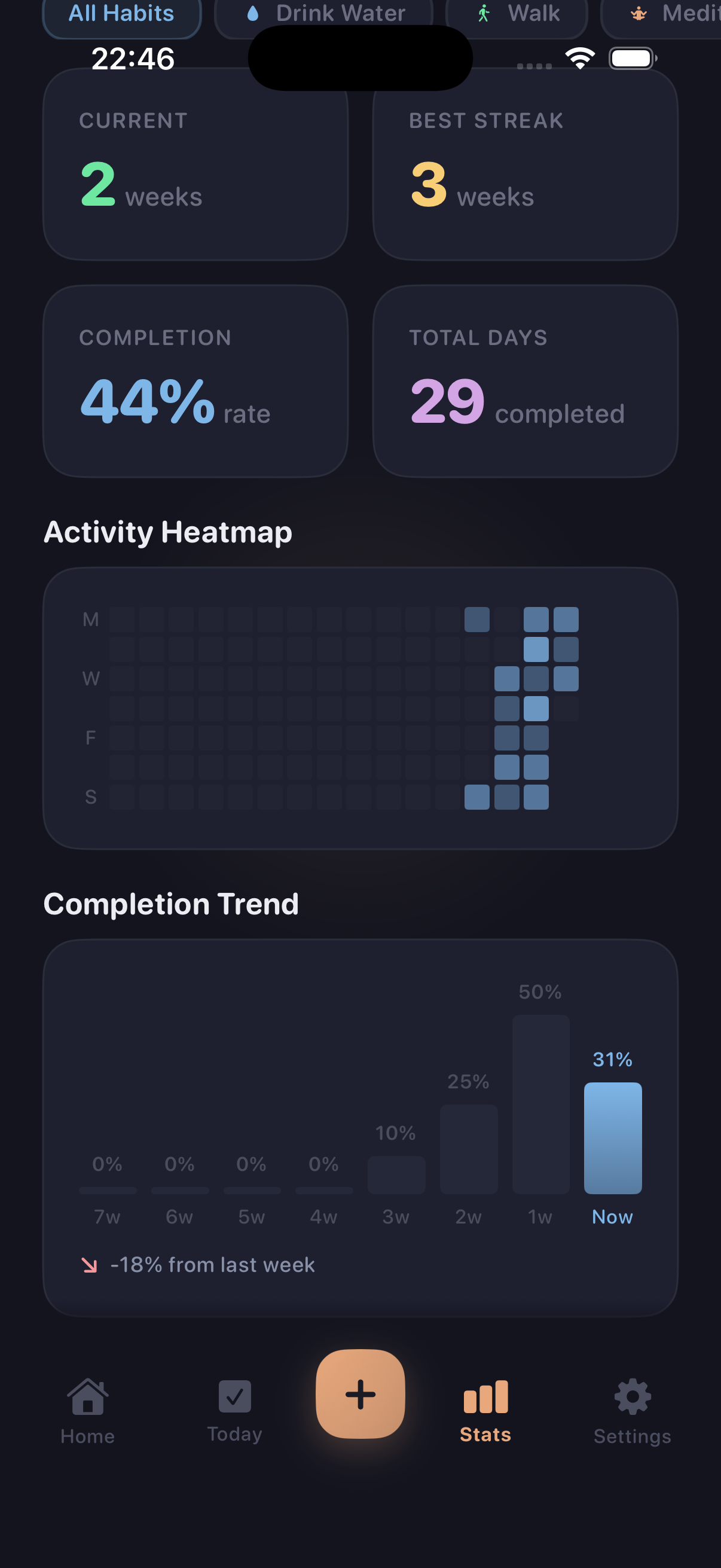
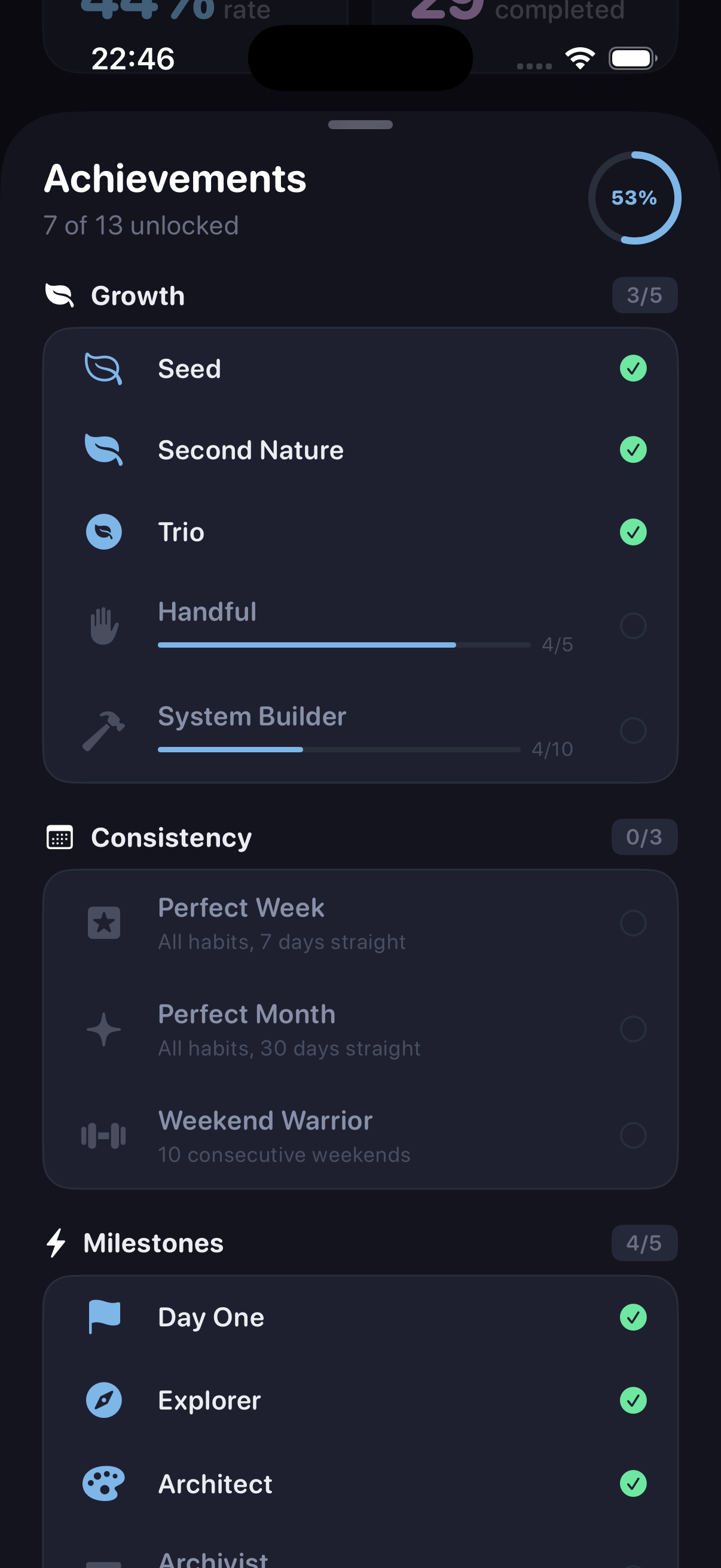
When your habits become visible, they become part of who you are.
Built for People Who Show Up Quietly
Huybit isn't for everyone. It's not the flashiest app. It doesn't have AI suggestions or social sharing or weekly reports emailed to your inbox.
It's for people who want a quiet tool that does one thing well: helps you see that you're showing up. Day after day. Link by link. Bit by bit.
If that sounds like what you've been looking for, Huybit is free on the App Store.
Start building your chain today
Free on iPhone. No account required. Your data stays on your device.
Download Huybit